
Commercial & Low-Slope Roofing
Flat Roof Problems Usually Start With the Details.
Water moves differently on a flat or low-slope roof. Drainage, seams, flashing, rooftop equipment, penetrations, and transitions all have to work together.
Burchfield Roofing Services repairs and replaces flat and low-slope roofing systems throughout St. Augustine and Northeast Florida, including TPO roofing for commercial buildings and other appropriate applications.
Before You Repair or Replace
The Questions Worth Answering First
Does a leaking flat roof need to be replaced?
Not necessarily. If the problem is isolated and the surrounding roof is still in serviceable condition, a targeted repair may make more sense. The important part is finding where the water is entering and determining whether the failure is localized or part of a larger roofing problem.
Is ponding water a serious problem?
Water remaining on the roof after rain deserves attention. Recurring ponding can point to blocked drains, low areas, poor drainage, insulation problems, or movement within the roof assembly. The cause matters more than simply seeing water on the surface.
Can a TPO roof be repaired?
Yes. Many TPO roof problems can be repaired when damage is limited to a seam, penetration, flashing detail, puncture, or another isolated area and the surrounding membrane remains in good condition.
Why do flat roofs leak around HVAC equipment?
Rooftop equipment creates additional curbs, seams, flashing, penetrations, and transitions. Those areas can become leak points as materials age, move, separate, or are damaged during service work.
TPO Roofing
Why TPO Is Common on Florida Commercial Roofs
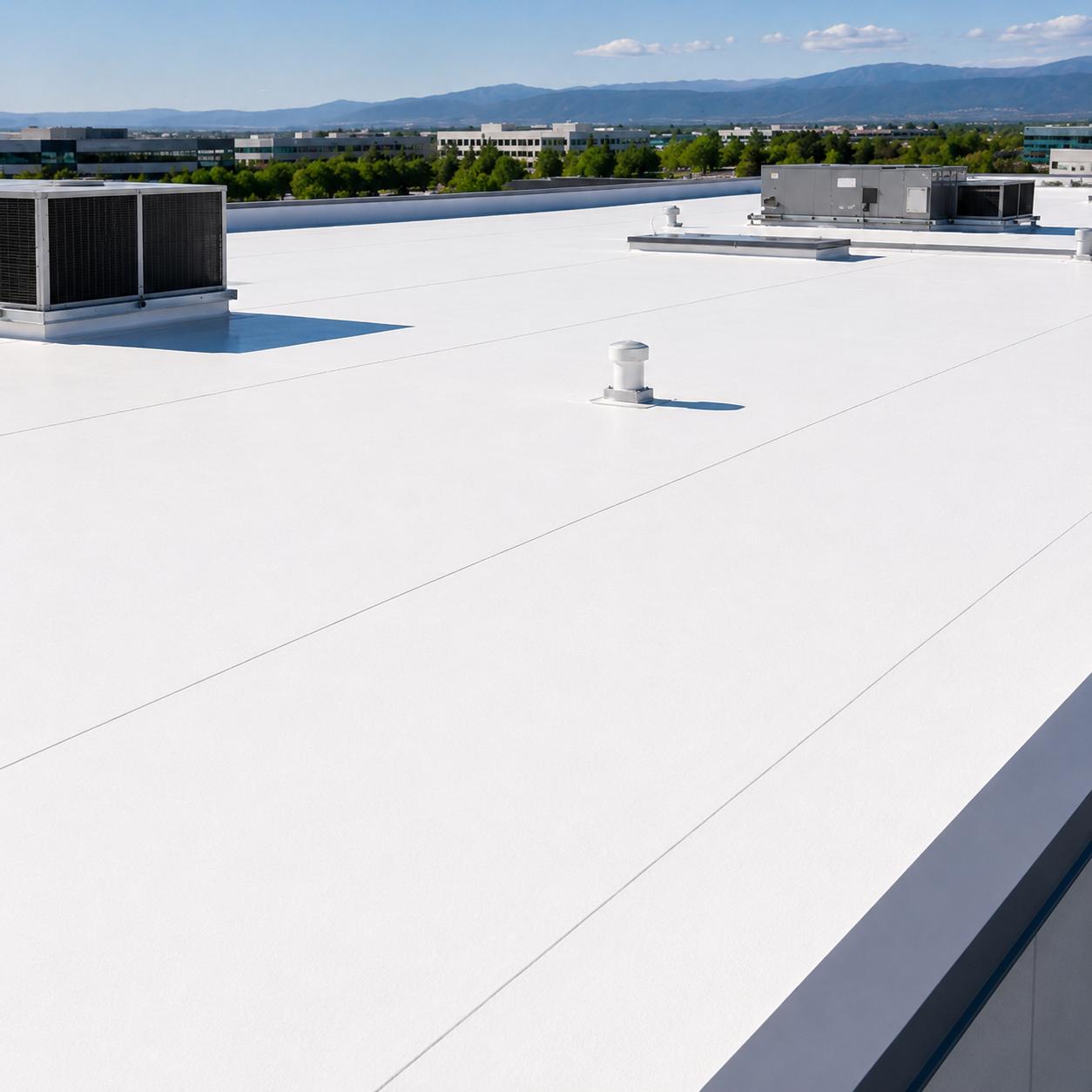
TPO is a single-ply roofing membrane commonly used across large flat and low-slope roof areas.
The membrane is installed in sheets with heat-welded seams that form a continuous roofing surface. Light-colored TPO membranes can also reflect more solar energy than darker roof surfaces, making them a common choice for commercial properties in hot climates.
Where Flat Roof Problems Develop
The Membrane in the Middle Is Only Part of the Roof
Flat roofs often have more penetrations, drainage points, equipment, and transitions than a typical residential roof. Those details deserve close attention during an inspection.
What happens: Seams can separate, become damaged, or develop problems as the roof ages.
What we check: Seam condition, previous repairs, membrane movement, and signs of moisture intrusion.
What happens: Curbs, pipes, vents, and other penetrations create additional flashing and transition points.
What we check: Flashing, membrane condition, sealants, transitions, and areas disturbed by previous service work.
What happens: Blocked drains, low areas, or poor drainage can leave water sitting on the roof.
What we check: Drains, scuppers, drainage paths, recurring ponding areas, and surrounding roof conditions.
What happens: Perimeters and edges are exposed to wind and contain important flashing and attachment details.
What we check: Edge metal, flashing, membrane attachment, visible movement, and storm-related damage.
What happens: Flat roofs often meet walls, parapets, pitched roofs, or other roofing materials.
What we check: How the different surfaces meet and whether water is being directed away from those transition points correctly.
Flat Roofing in Northeast Florida
Florida Weather Puts Drainage and Waterproofing to Work
St. Augustine roofs deal with long periods of sun, heavy rainfall, tropical weather, humidity, and strong winds. Flat roofing systems have to manage all of them.
Flat roofs rely on properly functioning drains, scuppers, slopes, and drainage paths to move large amounts of water off the building.
Roofing membranes spend years exposed to Florida sun and heat. Material selection, installation, and roof condition all affect long-term performance.
Roof edges, perimeter attachment, flashing, membrane attachment, and the underlying roof assembly all matter during high-wind events.
Ponding Water
Water Sitting on the Roof Is a Symptom. Find the Cause.
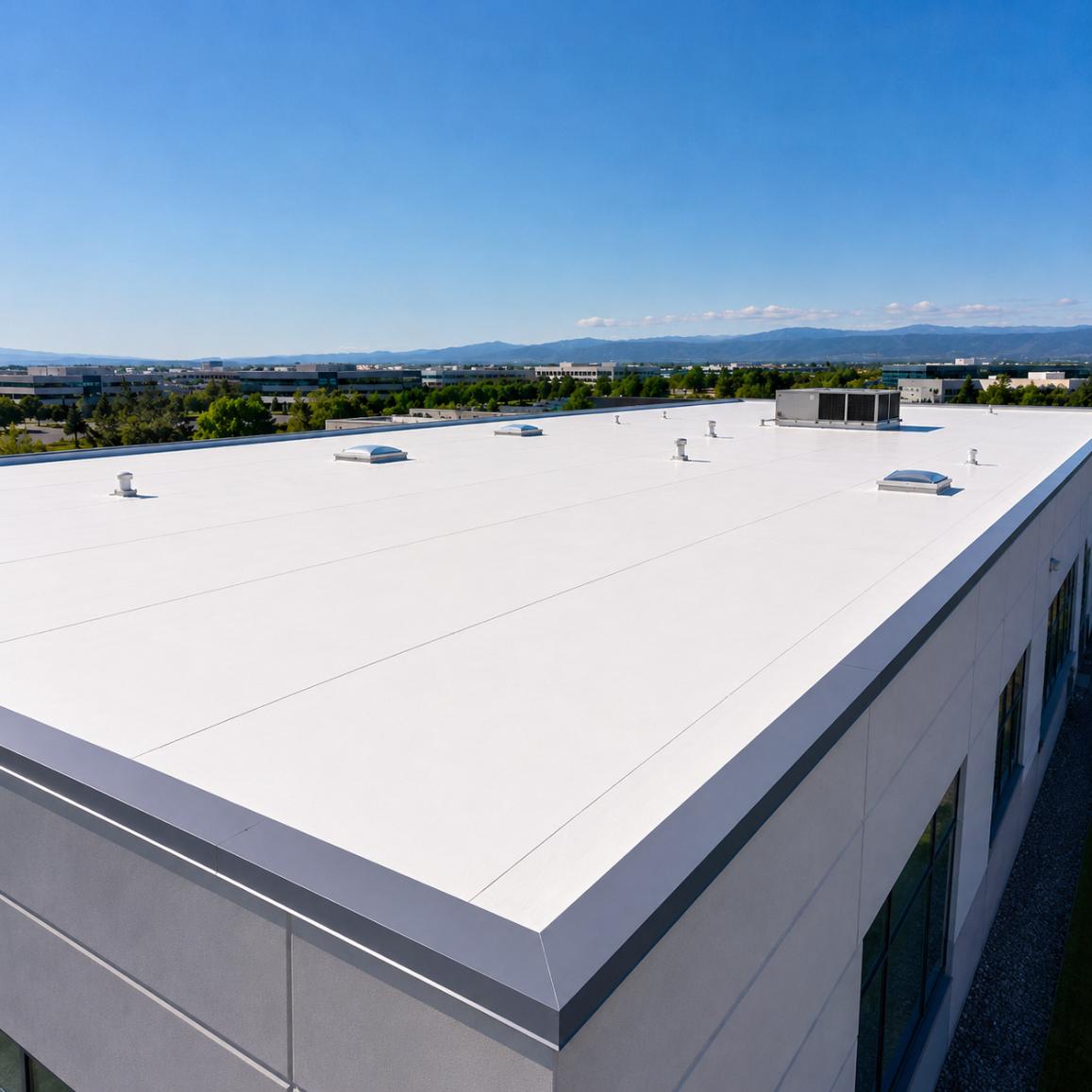
A flat roof is not literally flat. It should have enough slope and drainage to move water toward drains, scuppers, gutters, or other designed drainage points.
Water that repeatedly remains in the same areas can be related to clogged drainage, low sections of the roof, compressed insulation, structural movement, or problems within the existing roof assembly.
That does not automatically mean the roof needs replacement. It does mean the drainage problem should be understood before another repair is placed over it.
Repair vs. Replacement
A Leak Does Not Automatically Mean You Need a New Roof
The better question is whether the problem is isolated or whether the roofing system is beginning to fail across multiple areas.
Replacement becomes more reasonable when there are recurring leaks in different locations, widespread membrane or seam deterioration, significant storm damage, moisture below the roofing system, persistent drainage problems, or numerous previous repairs. We inspect the roof first and base the recommendation on what is actually happening.
Mixed Flat & Pitched Roofs
The Transition Between Roof Systems Matters
Some commercial and residential buildings combine flat roof sections with pitched shingle or metal roofs.
Water moving from a pitched roof onto a lower flat section can concentrate runoff in a relatively small area. Flashing, wall transitions, membrane terminations, drainage, and the connection between different roofing materials all deserve close attention. On mixed roof designs, the transition is often more important than the open field of the roof.
Flat & TPO Roofing · St. Augustine, FL
Dealing With a Flat Roof Leak or Aging Commercial Roof?
Burchfield Roofing can inspect the membrane, seams, drainage, flashing, penetrations, rooftop equipment, and transitions to determine whether the roof needs a focused repair or whether replacement makes more sense.
